!!COMING
SOON--IN TOPEKA!!
<>
In
the next three weeks I am scheduled
for two library discussions of two novels published this past
year: at the
Mabee Library at Washburn, Tuesday, November 23rd, from 1:00
to 2:30
p.m., and at the
Topeka Public Library (as
a Sunday Afternoon with a
Kansas
Author) December 5th, from 2:00-3:00 p.m.
I plan to open with a
preview of coming attractions:
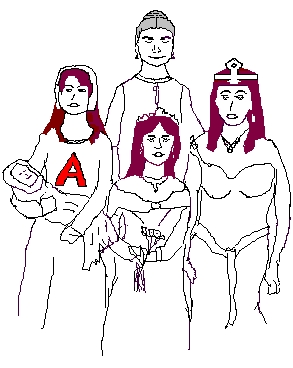
my seven-year-old niece, Anastasia, reading the first story, "Benny
Bunny's Berry Pie," from a collection of eight of my children’s stories
that was to be published by my brother Russell’s The Cider Press by
Thanksgiving (it obviously won’t be, but is on line at theciderpress.com).
<>
Then
I plan to discuss my own novel, The
Bridge of Dreams, which is also on
line (at thebridgeofdreams.com), particularly the first two chapters
that I
read to you on line, as I do all the sonnets that open each of the 24
chapters (also available on a disc prepared by my grandson, Alexander,
a senior at
Topeka West High School.
Then I will discuss the
novel published this last
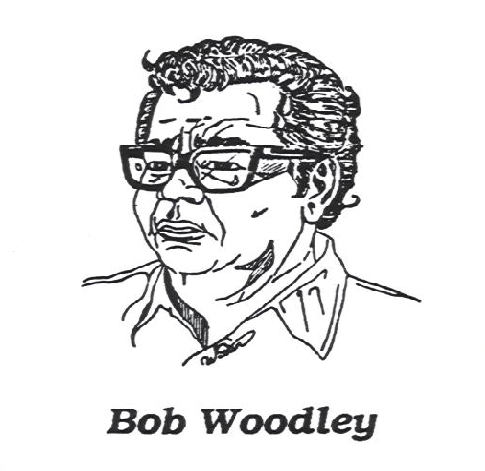
month (by The Cider Press), Bob Woodley’s Cry to Dream
Again, his Master’s Thesis at KU in 1962.
Bob was my office mate for 13 years (until he died in the summer of
1976, while
I was spending the summer in Japan).
I still say he was the closest friend of my life. I will be talking
mostly
about the problems of preparing a 48-year-old manually typed thesis for
publication as a book comparable to my own The Bridge of Dreams, and why
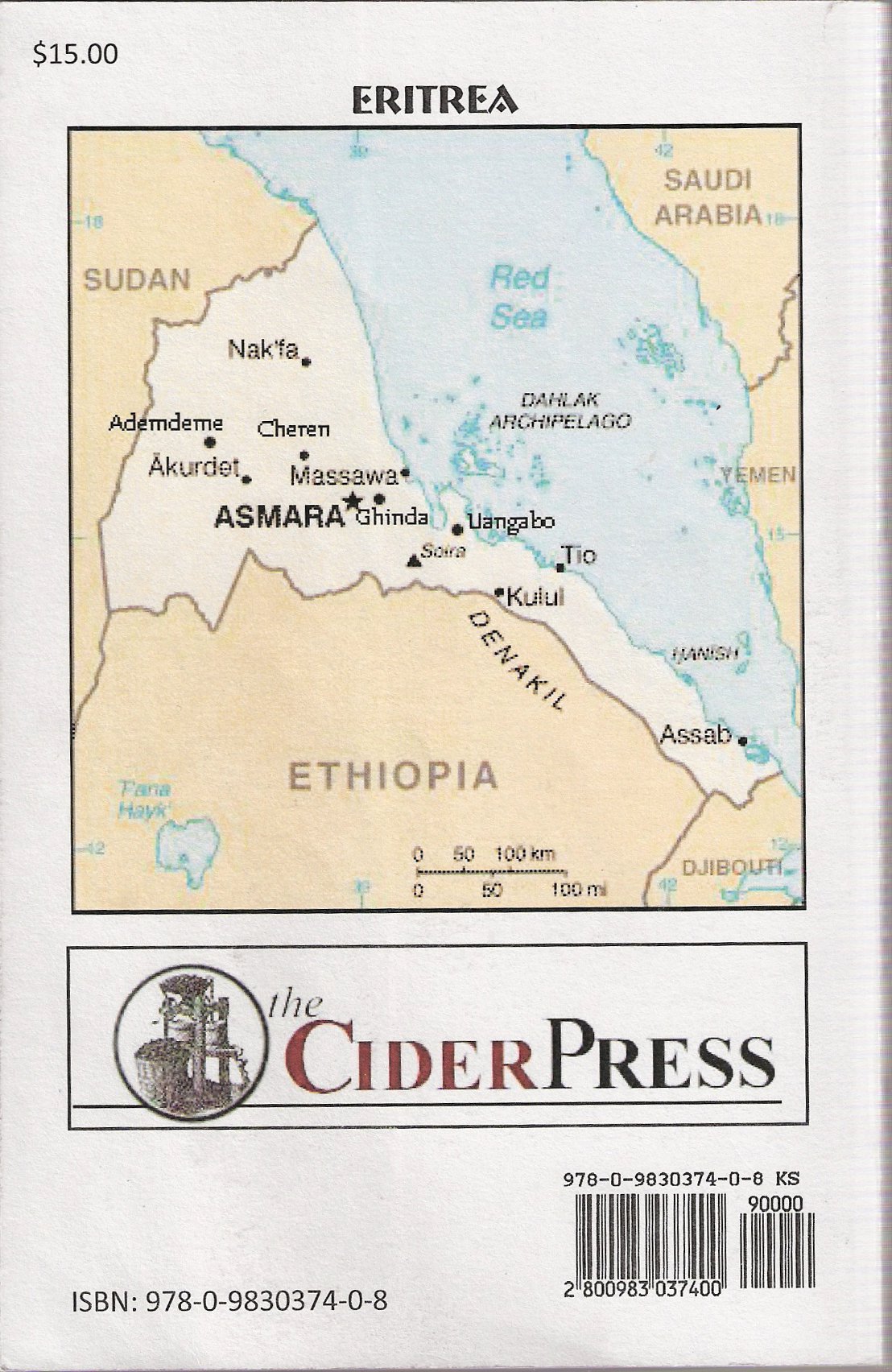
the maps of Africa were chosen for
the cover.
<>

I
will close by reading a single sonnet from the 90-some in The
Collected
Sonnets of Robert N. Lawson (published by The Woodley Press, in
2004, as
companion text to my novel), chosen by the winner of a drawing to win a
free
copy of that book.
Everyone is welcome to attend
either
presentation.
When I began, I planned to do three things in
spinning
my web on this my Web Site.
The first was
structural (did structure my life for two years) and central,
to self-serialize my 24-chapter novel,
The Bridge
of Dreams, a chapter
a month for the first two years of the 21st century.
I began doing that in January of 2000 with:
and finished in December of 2001, with Bridge
24, having crossed
The Bridge of Dreams (for intervening
chapters,
go through Contents
).
As a continuation of that project, I spent the next
two
years on a four-play dramatic
adaptation of that novel, each a three-act play, based
on Jack's four women:
Betty, Laura, the Countess, and Christine.
I began, in February, 2002, with Betty
I: Pygmalion. In December, 2003,
I added the last act of the last set,
Christine
III: The Bridge of Dreams.
(for links to the others, see Plays).
After publishing the poems of a collection of poetry
I
self-published in 2000,
Going Formal, online
in 2004, I spent 2005 self-serializing a revision of
the 12 chapters of my second novel, The
Sequel (to The Bridge of Dreams),
which I wrote on the challenge of writing a 50,000 word
novel in the month
of November, 2004, posed by NaNoWriMo (National Novel
Writing Month).
I began, in January, with Sequel
1: Romeo and Juliet and, for
December, added the last chapter, Sequel
12: Thomas and Phèdre.
For 2006 I was doing a second revision of that
novel,
a chapter a month,
and fixing the text, after a fashion, by running copies
at Pro-Print each month.
(I stopped as I wrote my third novel, A Tale of
Two Dairies, a coming-of-age
novel for Young Adult readers, in the last half of
2006,
revising it in the
first half of 2007. Having finished that, I
planned
to return to revising
The Sequel--the last half of 2007.
I keep promising--
but have fallen behind).
The second thing I decided to do was affirm my Kansas roots by
introducing
other Kansas writers, one a month, most of them friends,
most of them published by The Woodley
Press--and all with books in print.
I began that in February of 2000
by introducing the friend for whom the
Press is named, Bob Woodley
(added Chapter 5, "The Hunt," from his unpublished
novel, Cry to Dream Again,
in September) and our most Kansas writer (in my
judgment), David Tangeman.
For authors added from March, 2000, to September,
2009, see Kansas Authors.
The third
thing
I decided to do with this Web Site was to reach out that third of the
way
around the world to offer, an author a month, a survey of:
In March of 2000
I offered a Foreword,
describing my own discovery of Japanese Literature in the summer of
1973,
and the
Introduction to a book surveying
Japanese literature that I was working on, theoretically for
high-school
students. In April I began discussing individual authors with an
essay I had published in Inscape in 1974 on the
availability
of Mishima Yukio. He was the
best
place to begin then, and, in my judgment, still is--was selected by The
East magazine as the most important Japanese writer of the
20th
century. So Mishima is the dominant figure (for me at least)--is
still the most available--and I added my Modern Noh Play,
Mishima,
in September, 2001, my essay on his novel,
Forbidden Colors,
in November, 2001.
But I then decided to
pursue, for the next five
months
of 2000, not the full tradition of Japanese literature, which that
short
book for high school students considers, but, instead, as with Mishima,
availability.
I presented an overlapping history of 20th-century Japanese
fiction,
generation by generation, through five more of its practitioners: Natsume
Soseki (1867-1916) , Tanizaki Junichiro (1886-1965), Kawabata
Yasunari (1899-1972--Nobel Prize, 1968), (Mishima
(1925-1970)
would come here), Abe Kobo (1924-93), and
Oe Kenzaburo (1935-Present--Nobel
Prize, 1994) . I elected to do this because modern
novelists
are easier for an American reader to approach, these writers are all
major
novelists, all available in multiple titles in English translation,
and,
while very different from one another, form a tradition the reader can
easily come to understand. I added
Dazai Osamu (1909-1948),
and Akutagawa Ryunosuke (1892-1927), as two other important
figures
in my own experience of Twentieth-Century Japanese Fiction, before
beginning
the more general review of Japanese literature.
In December, 2000, I
began to introduce the longer
tradition
of Japanese literature by considering the monumental classic,
The
Tale of Genji, written by Lady Murasaki Shikibu exactly
1000
years earlier. Then, for 2001, I began the chronological
consideration
of Japanese Literature, from 712 A.D. to the present, by presenting the
first Japanese book, the Kojiki, largely through my
translation
of a contemporary children's book presenting one of the well known
stories
from that classic, followed by my favorite Japanese poet, who lived in
the tenth century,
Ono no Komachi, and a third great Heian woman
writer,
Sei Shonagon, who wrote The Pillow Book.
Then I moved to the Medieval Period by presenting my translation of Kamo
no Chomei's
Hojoki (for which I have an increasing fondness
the longer I live), then the better known medieval classic, The
Tale
of the Heike, the military epic of the Heike clan from 1153 to
1181 that established the samurai values in Japanese literature that
then
run from the Noh drama of a century or so later through the work of
Yukio
Mishima. Then I offered Zeami Motokiyo
(1363-1443), and the
first of the three great Japanese theatre traditions, The Noh Drama,
then the writer most closely associated with the development of the
other
two Classical Theatre Forms, Kabuki and Bunraku, in the
following
period, the "Floating World" of Tokugawa Japan, Chikamatsu Monzaemon,
then the other two writers of the big three of that Golden Age of the
Japanese
Renaissance, the novelist Saikaku, and the poet Basho.
I began my close by offering the second item on Mishima, the
Modern
Noh play I wrote of that title, that was performed in four places in
Kansas
in 1983 (or that Jack and Jordan do in New York in 1973--before I wrote
it). Then I offered an essay I wrote a few years ago on the
contemporary
playwright
Betsuyaku Minoru, four of whose plays I translated for
my second Master's thesis in 1985, then another item on Mishima,
an essay on his Forbidden Colors I presented at a
professional
meeting over twenty years ago. I closed in December, 2001, with,
a paper I presented December 8, 2001, at the Saturday Night Literary
Club
here in Topeka, Three Heian Women.
As I come back to work
on this web site, the project
I
plan to take on in Japanese literature is a review of the early 20th
century
novelist Natsume Soseki. I have
revised the essay I wrote on him earlier, as part of the book on
Japanese
literature I planned for high school students. Then I plan to
review
one of his novels each month, to complete a long essay (or short book)
on Soseki, since I now consider him the greatest Japanese
novelist,
and will be pleased to re-read his work.
To access the
earlier essays on the Japanese
authors
named above, see Japanese Authors.
* *
*
* *
That was my
game plan--modified en
route.
As it happens, in the last two-thirds of my career at Washburn I found
three largely extra-curricular activities (following Emerson's Law of
Compensation)
to replace the teaching experience in the Great Books of Western
Literature
I had watched evaporate around me:
1. From the summer of
1973
to this very day I have been a student
(and
sometimes teacher) of Japanese Literature (even if I've often neglected
it).
2. Then, at the beginning of
Summer
School, June 1, 1975, I began writing my novel, finally The
Bridge
of Dreams (but on that day the only thing I was sure of was
that
it would have 24 chapters).
3. Then, with the death of
Bob Woodley,
in the summer of 1976, I became more active with local writers--as his
surrogate. We did the first Inscape published by
Headwaters
that fall (which contained the sonnet I now present as part of my
comment
on Bob). In October of 1980 we established the Woodley Press in
Bob's
memory, which has now published over 40 books in this twenty-five plus
years-- poems, plays and stories by Kansas authors--in most cases that
author's first book. In July, 2004, the Woodley Press published
my Collected
Sonnets (fifth edition), and it is still publishing one or two
Kansas authors a year.
All in all, it hasn't
been a bad trade-off for me
personally,
whatever it may have been for a generation of Washburn students, who
have,
indeed, in this academic open market, chosen for themselves. Now,
though officially retired for over fourteen years, I'm still offering
these
doors as opening into a Liberal Education from my side of the
university,
which, in the supremely open market of the world wide web, a passer-by
may choose to enter--or, of course, may pass on by to more appealing
sites.
I had originally intended to add supplementary
items,
as, way back when,
I linked Bridge 3 and Bridge 4 by providing Jack's
script
for
but have no others in mind at present.