|
| Biography |
|
| |
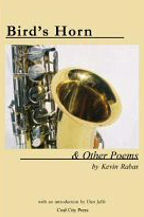
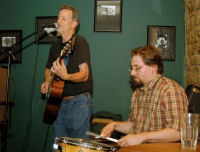
Kevin Rabas (MFA, PhD) teaches creative writing and literature at Emporia State University. He co-directs the Creative Writing Program and co-edits Flint Hills Review. An avid jazz drummer and critic, he also writes for Jazz Ambassador Magazine (JAM). He has poetry and stories published in The Malahat Review, Event, The Mid-America Poetry Review, Nimrod, and elsewhere. His first book of poetry, Bird’s Horn & Other Poems, was published by Coal City Review Press (Lawrence, 2007).
Return to Top of Page
|
|
|
| Published Work |
|
|
Bird's Horn & Other Poems (Coal City Review Press, Lawrence,2007)
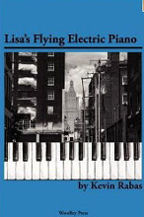
Lisa's Flying Electric Piano (Woodley Press, Topeka, 2009)
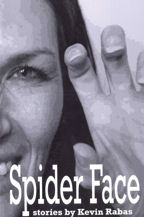
Spider Face (Otoliths, 2011)
Return to Top of Page
|
|
|
| Writing Samples |
|
| |
SUNDOWNERS
The nurse called it Sundowner’s Syndrome, said mainly the old got it, especially those closest to death, and because I was young, was surprised that at age 21 I was already up and out of bed every evening around ten till six, roaming the halls of the Neurological Ward barefoot, with my hospital gown half-open and my sack of morphine wheeling along behind.
My spine surgery was just two weeks ago. Surgeons removed half of my second vertebrae so they could get a peek at what they at first thought was a lymphatic tumor wrapped around my spinal cord, something which would require radiation as well as chemotherapy after the laser was through. However, once inside, after removing the back half of the vertebrae–(“Won’t I be needing that? I asked the surgeon. “Don’t worry,” he said. “Your muscles will compensate”)–they found the problem to be nothing more than a tight bundle of blood vessels clumped there since my formation. These they scorched out with the laser, sewed me up, and loosened the forceps securing my head and feet. I was told any mistake during the operation might mean paralysis or death. Perhaps this is why throughout the surgery my feet moved incessantly, as on a marathon run. Death can’t claim those moving. Death waits for prey to break for breath, then pounces, snapping the neck with one swipe.
As soon as I could move after surgery, I was on my feet, making slow figure-eighths around the nurses station. Spine surgery, when near the neck, lifts the shoulders, bows the legs, and bottoms the chin parallel to the floor. Locomotion appears mechanical, forced, as if the limbs are pulled by the strings of a marionette puppeteer.
I’ve been told my grandmother, too, was similarly driven. Two days after her triple-bypass, she was stumbling around the place, rag in hand, dusting. She scolded the attendants for allowing dust to collect. “God damn you if I don’t get a chance for letting all of this dust collect. Now look at this here fancy lamp. See all the sediment built up on the neck?” And if they persisted, tried to lead her back to her room, she would demand her slippers and her bag. I guess she figured that if she earned her keep, they’d let her leave. Or perhaps she too was running. She did such a job on the place, after a while the attendants tried to lengthen her stay. But eventually Grandma escaped. She stopped at the pay phone during one of her walks, called Grandpa and asked him to start up the cruddy blue Nova and come get her pronto. She abandoned the remainder of her pain-killing, cholesterol-maintaining medication into the phone’s coin return slot by the fistful. A passerby discovered the pills there later and notified an orderly. However, it was too late. Grandma had busted out. Sometimes I wish I was more like Grandma. Driven, driven in the right direction. She lives on a farm in Lucas, Kansas, about 400 miles from here (from KU Med Center in Kansas City, Room 403), and she lives with her eyes always open to the lives around her. For instance, she knows when a child’s catching the croup from miles away, and she’s notorious for making the long trot over with a home-remedy as soon as her pinched ears detect a cough or a wheeze on the night air. However, she never learned to how to drive. She certainly couldn’t help bail me out of here.
I can’t even begin to think who I’d call. Mother? No, she’d be out on the beat, running from interview to interview, from story to story. Sister? No, she’s still in California, probably getting her navel pierced. Father, nope. He’s miles away, pent up in a job site trailer, his eyes scanning the architect’s blueprints, hunting for flaws in the design, speculating at whether the walls will hold the ceiling, at whether the drains will channel the water, at whether the earthquake reinforcement is worth the while. My father slips on his tool belt without glancing at the buckle. Carpenters know their trade, even when they’re promoted slowly over the decades to foreman, then superintendent. They know where their tools are, always, and how to strap each into reach. I hear my father’s voice only on the phone now, my mother’s when she brings me flowers, my sister’s when I flip on the tube. I see my sister through the camera’s eye at the MTV Beach House in California, as an extra paid in pizza, fleeting fame, and luke-warm Crystal Light lemonade. She’s wearing a polka dot bikini and has a super-soaker squirt gun in hand. She takes aim at the camera man, while a boy with the body of a boxer, with yellow blow-up floaties around his biceps, lofts and plops her into the pool. No, if I want out I will have to get out on my own.
The nurse said the hospital attendants usually had to lock-down as early as 5:30 on the Sundowners, bolting them into their rooms, but because I was young, the attendants might never get around to locking mine. She said the Sundowners often wander aimlessly, babbling on about younger days, searching the hallways for their pasts.
At the end of the hallway, across the black and white checkered tile, is an elevator. On my way there I press the button to my morphine once and watch the bubbles in the bag rise to the surface. The nurse said it was advisable to press the button only once every fifteen minutes or so. I press the button again. Press the button twice and the taut skin between my shoulders and neck relaxes, almost heaps like a Chiarpe’s. Press four times and the throb from my stitches subsides. I press again. Press six times and I can no longer feel my spine. Again. Press eight times and I’ve left my own body and am floating somewhere above. I press the button repeatedly, as often as the dispenser allows.
Although I can hear the slap of my feet on the tile, I no can no longer feel my feet on the cold tile. I am floating, floating on a blow-up raft, the type I rode as a toddler, bounded only by the yellow plastic sides of a wading pool. My trunks are pulled up past my belly, and I’m wriggling my pink feet in the air madly as a beetle does when on his back.
The sun is just rising, and the air around is still purple. My mother drapes a hose into the pool, and the water rises. She seats herself in a lawn chair nearby and props her wicker hat down low over the stack of newspapers she is perusing. She keeps a lazy eye on me, peering at me now and again, sunning in her bathing suit, studying the news as the competition portrays it. My sister toddles out to join us, wrapped in a make-shift bikini fashioned from two red western-style handkerchiefs. She carries a stack of plastic cups, which she fills from the pool. She doles water from one cup to the next.
The sun drifts to midday, and in the distance we hear hammer-taps. My father hammers fence-slats into place, separating one small green suburban lot from the next. He hammers at a steady pace, each tap sounding a third above the last in pitch. Iron on aluminum has a certain ring. If my father only knew how, he could play our backyard fence like a xylophone or marimba, tapping each slat so it would sing. He carries on with his work, every now and again he pauses to wipe his brow, puts a hand on his hip and peers at us. We all stop and look at each other, as if signaled. It’s strange. We all just stare at each other for a moment, then continue on. Perhaps it’s something in the summer air which causes this, perhaps it’s something cool inside of each of us, like a shadow held over from winter exhaled and exchanged through the eyes.
Nowadays, however, we don’t spend summers together, and we don’t see each other unless there’s an accident at hand. These shadow-glances have all but disappeared.
My sister topples into the pool, then rights herself. I navigate my raft around the monster bubbles that rise to the surface, bubbles full of breath, bubbles full of mystery, bubbles full of medicine. I’ve somehow managed to block myself in between my morphine bag’s metal cart and the wall. I’ve reached the elevator doors.
I punch the down button and wait for the elevator to arrive. I consider exploring another ward. I consider immediate escape. Escape is not likely. They have taken my clothes. It would be too obvious if I strolled out in my hospital gown with my morphine bag held tight to my chest. No, I won’t be leaving my fix. Not yet anyway. I try the geriatric ward on two, contemplating my coming decision. They’ll keep me here another week. Hospitals always do. I press on. The sight of the old and wise might help. Can’t hurt.
In the geriatric ward the halls are packed. At the end of the hall through the bay windows I can see the orange sun nestled among the skyscrapers, preparing to set. I’m beginning to feel romantic, nostalgic. I start my way through the crowd to the windows, weaving past dribble-lipped men and men held fast to walkers, stepping then stopping their ways toward the sun. Not one of them glances at me as I pass. I watch their glassy-eyes. I take care not to cut in front of any of those in wheelchairs, their fingers wrapped with white adhesive, speeding toward the end of the hall. Some wear glasses, some wear goggles, some wear shades. I pass a flock of Southern belles, their hospital gowns flowing like summer dresses, their backs bowed. Their bifocals dangle on chains, leashed. They drag their rotted sandals across the tile. I maneuver my morphine carrier around and out.
The nurse said sometimes sundowners dreamed about others’ lives, about the inevitable progress of life. And this is when they are most dangerous. This is when they begin to open doors, interrupting surgeries, startling other patients, setting off fire alarms.
At the end of the hall just before the fire exit we line up against the windows, our eyes always on the glass, until the sun vanishes and all that remains is a faint glow just beyond the skyscrapers’ blades. And then, after the window’s surface has blackened and reflected our gazes, we turn and begin questioning each other. Only a few questions before the loneliness sets back in. Only a few questions before most of sundowners begin shuffling back into rooms. I stay on a little longer. I press my face to the glass, straining for the skyline. I look hard for something solid. Memories start to flood back, of my mother at the City Council meeting, a reporter’s notebook in hand; of my father cooped up in a job site trailer, his hand down every now and again just to make sure his hammer is where it should be on his belt; of my sister, after another audition, her hair and her belly full of sand. I find nothing. There are only a die-hard few sundowners left at the window now: a man with a sunken head; a woman who swings her socked feet in her wheelchair; and a man with half a face pale and blank, half live and twitching, who paces in front of the window.
I glance at the fire exit, judging the odds, counting the stairs in my mind from second floor to first. I’d never make it. For a moment I consider swinging the door and holding it open while the others rush out. I think better of it. No use exposing them to traffic. No use putting them through the mad squawks of the nurses and the manhandlings the young plump guards would surely give them.
The man with the sunken head shuffles off. The woman with the socked feet wheels away. The orderlies are coming. Neither wants any trouble today. However, the man with the split face remains. He paces in front of the window. Orderlies come to fetch him. They take hold of his arms and lift him off his feet, which continue to pace above the floor. He’s moving slowly and steadily away from something, something one step behind him. I fear for this man when the night comes. I fear for him, strapped to his bed, his feet incessantly pacing. When his feet stop, I know his pursuer will soon take him. I can see it in his eyes, and now I know I must stop my own senseless wandering. I know if I’m going to leave this place with both my body and my mind, I must face my own pursuer. I return to my room, flip off the light, and stroke my temples. The forceps dug in deep there. I lightly caress my stitches. The blade cut deep, but I didn’t flinch. I kept moving.
(Originally published in Event, 2005).
Return to Top of Page
|
|
|
Author Interview |
|
| |
Q: Where did you grow up?
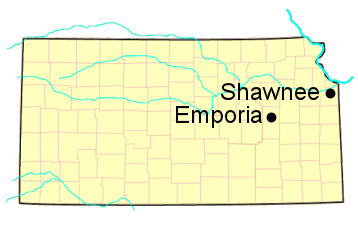
A: Shawnee, Kansas. There were more trees and cows there, when I was growing up. Now, there are more big houses. I also lived for a short time at Twin Oaks, a block or so from UMKC in KCMO, while working on my BA in English. I lived for about three years in Manhattan, KS, working on my MA in English and working, for a time, as a reporter for The Junction City Daily Union newspaper. I lived for three years in Lawrence, KS, while working on my PhD, and now I have lived about three years in Emporia, KS, where I now teach. So, most of my life has been lived in Kansas.
Q: Who really inspires you as an author? and, Who did you love to read when you were growing up?
A: I am inspired by many writers, poets, and playwrights. Certain works by a range of poets and writers really get me moving. For instance, Thomas Lux's "Refrigerator, 1957," I think is a both humorous and moving poem, and its rhythms and cadence always do something for me. Kim Addonizio's "The Numbers" also is a favorite. Or, Tim Seibles' "For Brothers Everywhere." Those are some poems by contemporary poets that I return to now and again. However, more locally, William Stafford's poems "Ask Me" and "Traveling Through the Dark" are exquisite, and it I think it is right that they are so highly anthologized. Jonathan Holden's "Western Meadowlark" is also a favorite of mine. It is wry and witty, but also endearing without being precious. And it speaks of the local cry of our state bird in a jazzy way. Amy Fleury's "Always Girl" and "Backroad" are also recent favorites. And Denise Low's "Spring Geese" has been a favorite of mine, and is seasonal, right now. I am currently working on my chops as a jazz poet, and poets who have influenced and inspired me in that category or genre include Langston Hughes, Kerouac, Baraka, Harjo, Mackey, and Kevin Young, among many others. Some of my favorites in the Modern American canon of poetry include the following (not an exhaustive list): Whitman and Dickinson (where it begins), Stevens, Mina Loy, Williams, Pound, Eliot, HD, Moore, Masters, Stein, Frost, Cummings, McKay, Hughes, Tolson, Bennett, Cullen, Millay, Hart Crane, Oppen, Kunitz, Olson, Bishop, Rukeyser, Hayden, Berryman, Stafford, Lowell, Brooks, Duncan, Levertov, O'Hara, Ginsberg, Creeley, Bly, Wright, Ashbery, Kinnell, Merwin, Sexton, Rich, Plath, Snyder, Knight, Baraka, Lorde, Harper, Gluck, Komunyakaa, and Forche. If asked to touch on the work of key poets in the modern period, I would start with this list, I think, although I know I am leaving out many, many important poets.
As for playwrights, currently I'm studying Beckett, but other modern and contemporary playwrights that I have been reading lately include Tennessee Williams, Arthur Miller, Loraine Hansbery, Wole Soyinka, Harold Pinter, Sam Shepard, David Mamet, August Wilson (a jazz connection), Tony Kushner, Paula Vogel, N. Shange, and Charles Fuller. I write plays, as well, and I learn a good deal about creating character and persona from these dual interests, as well as about how to create dialog, in poetry and in playwriting, that is compelling and honest--that asks us to listen, and we oblige.
In terms of prose, you are lucky to have Thomas Averill at Washburn. I am rereading "The Musical Genius of Moscow, Kansas", from Ordinary Genius this week. It is a brilliant short story. I love short stories, and I write them, when I can. But let me move on to modern and contemporary novels. Here are some of my favorites, both past and present:
Bellow: Herzog
Capote: In Cold Blood
Cather: My Antonia
Day: The Last Cattle Drive
DeLillo: White Noise
Ellison: Invisible Man
Faulkner: Light in August
Fitzgerald: The Great Gatsby
Hemingway: Farewell to Arms
Hurston: Their Eyes Were Watching God
Kerouac: On the Road
Kingston: Tripmaster Monkey: His Fake Book
London: The Call of the Wild
McInerney: Bright Lights, Big City
Morrison: Beloved
Pynchon: The Crying of Lot 49
Roth: Goodbye, Columbus; Zuckerman Bound
Silko: Ceremony
Wright: Native Son
For part two of your question, I started reading as much of the above lists
as a kid, when I could. My mother was a journalist, and is an avid reader. By her bedside, there is always a big stack of books from the library. She encouraged us to learn as much as we could, and she took us to the library frequently. She started my sister and I on the path, and we are still walking it today.
Q: When did you discover that you were a writer/poet?
As a little boy, I wrote a lot. I also drew. In middle school, I drew cartoons with dialogue during class. One day, I tried to woo a girl with one, and it didn't work. I quickly switched to writing poetry. Perhaps that is when it happened, when I understood that writing could change things. It could change my life. I might actually go on a date.
Q: Is there one piece of advice that you could give to those who are aspiring to be wirters?
A: Read a lot. Write as often as you can. Go inward. Work to understand and change yourself for the better. Also, be observant. Find out what the world around you is up to.Find or make your place within it. Dream big.
Q: What about Kansas inspires you in your writing?
A: My parents are from the Lucas/Lurray area, which is rich in local color.
Also, it is an area that has a reverence to the plains that I have inherited. People are different here. We love each other and the land in a distinct way. We believe in hard work. We don't complain. We don't mind working in the dirt. In fact, many of us enjoy it. We look in any direction, and we can see the gradiations of sky. We can almost see the curvature of the earth. Those open spaces embrace big dreams, I think. I am lucky to live here.
Q: I understand that you are a musician. Is there anything about being a musician that helps you to write certain kinds of internal rhyme into you're poetry, and conversely is there anything in your poetry that helps you to write music?
A: I have tried to quit music to write, and to quit writing in order to play better. Neither worked. For me, the two go together. If I can't get a poem right, I go to the drums. I bang it out there. I wait for the beauty of song to play itself over the drums and cymbals. Then, I have the feel of it. The words will come. Perhaps that is an entrance into my process. Also, I listen to a lot of music, most of it over and over. I've listened to John Coltrane's Giant Steps and Coltrane's Sound albums in excess of 100 times, and although I sing poorly, I can sing the melody of any tune on these albums, and some of the solos. There is a richness there, a variety, a build and release that you just don't get in all music, especially a lot of popular music. That can influence any art, including writing. And the lore and the rhythms and melodies, they too help. As for the lore, it is like the lore of any organization. Some people follow baseball. I follow jazz. But I wax and wane on how I follow. Often, I'd rather learn a great deal about one musician, or about one tune, or about one musical passage, rather than go for the broad strokes of a long lineage. Through this attention to the maller details, I think I come to find something deeper, something I can use over the years, as I learn that passage and its intricacies, as I learn many ways of playing that one tune, as I grow and come to internalize what is there. It becomes me, and I become it. And I hope then to pass it on, revealing and performing its many facets and intricacies faithfully. We can all grow in this way. Memorizing poems is one way to start, for writers. It is much the same thing.
Return to Top of Page |
|

| Kevin's Writing Games |
|
| |
Exquisite Corpse, or Consequences:
(to be played/written in a circle)
Write 3-4 lines. Pass what you have written to your neighbor. They continue those three lines, then fold the paper so that only their lines show. Continue. The person who began the game should finish off the series. Read aloud, when finished.
Echo:
Write one line. Write the opposite of the line that preceeds.
Example:
Red ants climbed from the ant hill on fire.
Water fell from the third story window.
Oxygen came from the tubes and spent. A door closed.
Life is a flock of birds, vibrant and true. The earth opened to rain.
Death is always slow as snails, redundant and recalcitrant, the universe a sieve.
Philosophy:
1. If
2. Then
3. Therefore,
On a piece of paper write the above. Fill in the first line, then fold over the paper so that only 2. and 3. show. The second group member writes in 2., and folds over, so that that line and line 1. are covered. 3. is filled in by the last group member.
Example:
1. If the hospital is on fire,
2. Then birds fly upward.
3. Therefore, we live for snails.
The trick is no group member gets to see what the group members preceding wrote. Randomness and chaos and chance are optimum in this exercise.
Return to Top of Page
|
|
|
|