

What is Respiratory Therapy?
Join one of the fastest growing fields in health care by becoming a respiratory therapist. These professionals provide respiratory care for trauma patients and those with heart and lung disorders. A wide range of career opportunities are available. For example, you may provide immediate patient care at the bedside or work in an emergency room to assist in establishing an airway or delivering lifesaving breathing treatments. Another opportunity may include collaborating with physicians in intensive care units to manage ventilators. Or, you might join an air-ground transport team that transfers critically ill patients. Become an essential member of a health care team by choosing a career that's in high-demand and provides daily rewards.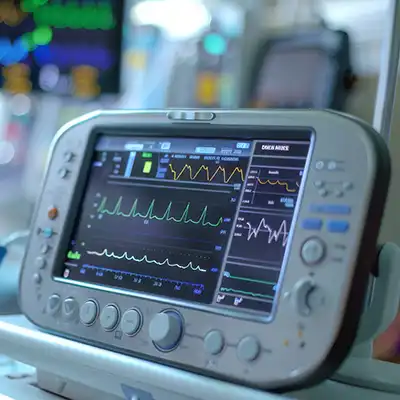
Why Washburn for Respiratory Therapy?
Earn an Associate of Applied Science degree in Respiratory Therapy in just two years at Washburn University. Our program develops qualified graduates who can deliver safe and effective respiratory care and patient education. During five semesters, you will study in the classroom and spend extended time in the hospital and clinical setting. Learn to perform basic cardiopulmonary assessments and treatments as well as cardiopulmonary diagnostics and trauma care. Instruction also covers patient education on topics such as COPD and asthma. Upon graduation, you will be prepared to take the national credentialing examination that leads to the Registered Respiratory Therapist (RRT). Among the benefits at Washburn:
- Our central location allows for a well-rounded clinical experience. Washburn's affiliations range from smaller hospitals, as far west as Hays, to those in the Kansas City area that provide the highest levels of complex care.
- Our smaller class sizes, limited to 18 students, result in close interaction with faculty. In the lab, our student to faculty ratio is 6:1 and it is 1:1 in the clinical setting.
- Washburn offers a classroom simulation lab specifically for Respiratory Therapy students.
- After completing your associate of applied science degree, Washburn provides a path to a Bachelor of Health Science (BHS) degree with an emphasis in either Health Services Administration or Medical Imaging. Our graduates can both work and continue their education to become a critical care nurse, Certified Registered Nurse Anesthetist (CRNA), pharmacist, sonographer or even a physician.
Choosing to become a respiratory therapist comes with a lot of responsibility and a personal commitment to care for patients who are seriously ill. These professionals typically feel a strong sense of accomplishment and know that their work is important.
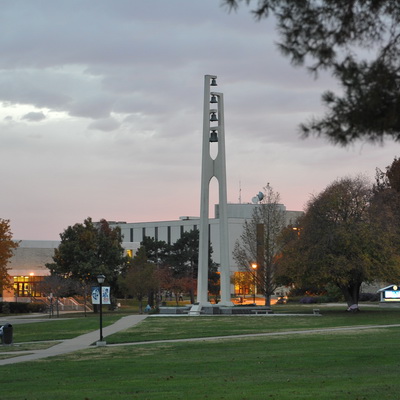
Application Process
Essential Functions
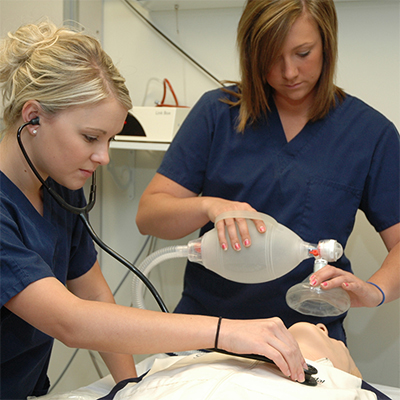
Clinical Experience
Degree Plan
Take a Closer Look
Respiratory therapists have high standards, with specialty board examinations provided by the National Board for Respiratory Care (NBRC) and licensure of respiratory therapists is determined by each individual state. Our faculty are committed to guiding you through your educational journey and into this highly rewarding field.
Ida Johnson, MHS, RRT - Program Director
785.670.2171; ida.johnson@washburn.edu
Shannon Walls, BHS, RRT - Clinical Coordinator
785.670.2172 ; shannon.walls@washburn.edu
Upon satisfactory completion of the two-year program, you are eligible to take the Therapist Multiple Choice (TMC) Examination and the Clinical Simulation Exam (CSE) from the National Board for Respiratory Care (NBRC) to earn your credentials. Once successfully credentialed, you are eligible to complete exams for the following advanced credentials:
- Adult Critical Care Specialist (ACCS)
- Asthma Educator Specialist (AE-C)
- Registered Pulmonary Function Technologist (RPFT)
- Neonatal/Pediatric Specialist (NPS)
- Sleep Disorders Specialist (SDS)
The Washburn University Respiratory Care Program, #200323, Associate of Applied Science degree, Topeka, KS, is accredited by the Commission on Accreditation for Respiratory Care (CoARC) (www.coarc.com).
CoARC accredits respiratory therapy education programs in the United States. To achieve this end, it utilizes an ‘outcomes-based’ process. Programmatic outcomes are performance indicators that reflect the extent to which the educational goals of the program are achieved and by which program effectiveness is documented.
Outcomes data from the Annual Report of Current Status has been posted on the CoARC website.
Professional Licensure Disclosure Respiratory Therapy
Washburn University is regionally accredited by the Higher Learning Commission (HLC), and is reporting this information in compliance with Criterion 2.A. and 2.B. The Respiratory Therapy program is accredited by the Commission on Accreditation for Respiratory Care (COARC).
This program is designed to meet the educational requirements for respiratory therapists in Kansas. Please review the website for the Kansas State Board of Healing Arts for additional details about obtaining licensure in the state of Kansas. If you intend to seek licensure outside of Kansas after finishing your program, use the link above to find information on the state or U.S. territory in which you intend to be licensed in order to identify whether Washburn's Respiratory Therapy program meets the educational requirements.
You can also review the licensing information for each state outlined by the National Board for Respiratory Care (NBRC).
For more information, please contact allied-health@washburn.edu.
Program Mission
The Respiratory Therapy program is focused on the development of qualified graduates who are prepared to provide the essentials for the safe and effective delivery of respiratory care and patient education.
Program Goal
To prepare graduates with demonstrated competence in the cognitive (knowledge), psychomotor (skills), and affective (behavior) learning domains of respiratory care practice as performed by registered respiratory therapists (RRTs).
Advanced Placement Policy
Because of differences in structure among respiratory therapy programs, we do not offer advanced placement. All individuals are welcome to apply to the Respiratory Therapy Program and matriculate through our established and sequential curriculum.
Transfer From Another Respiratory Therapy Program – Because of differences in structure among respiratory therapy programs, we do not offer advanced placement. Our program does not accept or allow prior respiratory education or work experience to replace respiratory care courses. All individuals are welcome to apply to the Respiratory Therapy Program and matriculate through our established and sequential curriculum.
Policies and procedures related to probation, suspension, dismissal and voluntary student withdrawal
Process for Unsatisfactory Performance
- Initially, a meeting between the student and program faculty will occur to assess targeted areas for improvement with regard to study habits, test taking strategies, time management, over commitment to outside employment, or excessive extracurricular activities.
- Faculty will recommend student to seek assistance from the Center for Student Success and/or Counseling Services to obtain assistance specific to their needs.
Program Dismissal
Any of the following situations will result in dismissal from the Washburn University Respiratory Therapy Program:
- Lack of student compliance with any university, program or clinical policy as well as any procedure.
- Any destruction of property whether university, program or clinical affiliate, or others (i.e., classmates or instructors.
- Failure of student to receive a “C” or better on all comprehensive final examinations (this includes clinical exams).
- Any withdrawal from a required core program course will result in dismissal from the program. Students who voluntarily withdraw from the program must complete a program withdrawal form and are responsible for dropping any program courses they are enrolled in.
- Failure to consent when a request is made for an immediate drug and alcohol test. Likewise, if student has a confirmed positive test for alcohol, illegal drugs or controlled substances.
- Failure to successfully complete all of the clinical objectives and competencies outlined within a required clinical course.
- Failure to demonstrate professional behavior that is consistent with program and faculty expectations as well as displaying professionalism by respecting outlined policies and procedures of the clinical affiliates. Any violation of policy, either program or clinical affiliates, can result in program dismissal.
- Students should initially attempt to resolve grade disputes with program faculty. If no resolution is achieved, student should consult with the Department Chair. Students should refer to the "Grade Appeal Process" in the Washburn University Undergraduate Catalog. In the event a student wishes to pursue an appeal they must submit written notification to the Allied Health Department Chair within 10 working days.
Policies and procedures for processing student grievances
Grievance Policy and Procedure
The following procedure should be followed for processing a grievance:
- Grievance Policy and Procedure
- Classroom Instructor/Student Conflict
- Directly communicate problem to instructor involved in conflict.
- If process outlined above offers no resolution, student should make an appointment with the Program Director (PD).
- If problem is still unresolved after visiting with PD, student should make an appointment with the Chair of Allied Health.
- Classroom Instructor/Student Conflict
- Clinical Preceptor/Student Conflict
- Directly communicate problem to clinical preceptor.
- If process outlined above offers no resolution, student should discuss issue with Director of Clinical Education (DCE).
- If process outlined above offers no resolution, student should make an appointment with the PD.
- Conflicts with program or clinical policy (If the student has conflicts with specific program or clinical policies the following process should be observed.)
- Directly communicate the issue creating conflict with the PD.
- If a grievance includes a majority of the class within the program the class representative should be utilized to communicate between PD and class.
- If informal complaints regarding the Respiratory Therapy Program or faculty are directed to the Respiratory Therapy Program Director and are not addressed in a manner which resolves the issue, students may make a formal complaint through the School of Applied Studies Grievance Policy and Procedure Form, which is located in the office of the Chair of Allied Health.
Policies addressing student employment in the profession while enrolled in the program.
Student Employment Recommendations
- Students should avoid working full-time while in the Respiratory Therapy Program. Some students may find it necessary to work part-time while advancing within the program. By the summer semester students are highly discouraged from working through the remainder of the program.
- Should a student continue employment, work schedules will not be allowed to interfere with program expectations. Incidents regarding employment that conflict with work and program expectations will result in disciplinary actions and dismissal from the program.
- In Spring of final semester if a student becomes eligible to work under a student permit granted from the Kansas Board of Healing Arts (KSBHA). This type of employment is viewed the same as any other form of employment, and shall not interfere with the student and their academic requirements of the program. Clinical coursework should not be completed while working under the student permit.
- If a student obtains a permit from the Kansas Board of Healing Arts (KSBHA), a release form must be signed and returned to the Program Director granting approval to notify the KSBHA if the student withdraws or is dismissed from the program. Students should refer to the Kansas Board of Healing Arts located in the Appendix.
Bachelor's Degree
Many students continue to complete a Bachelor of Health Science (BHS) degree with an emphasis in Health Services or Medical Imaging at Washburn University.
By the Numbers
Employment of respiratory therapists is projected to grow by 19% by 2029 which is much faster than the average for all occupations. Growth in the middle-aged and elderly population will lead to an increased incidence of respiratory conditions such as chronic obstructive pulmonary disease (COPD) and pneumonia. (source: U.S. Bureau of Labor Statistics).
Experienced Salary
$89,170
Program Cost
Courses in this degree program are offered at the traditional undergraduate rate. Competitive scholarships are available to declared School of Applied Studies majors who qualify for the awards. Other scholarship opportunities are available through professional organizations such as Kansas Respiratory Care Society (KRCS) and American Association of Respiratory Therapy (AARC).
Dr. William "Bill" Leeds Scholarship Fund
The Dr. William "Bill" Leeds Scholarship Fund is awarded to students properly accepted, enrolled, and in good standing in the Respiratory Therapy Program at Washburn University. Dr. Leeds was a wonderful and colorful man, a great physician, and friend. He served as the Medical Director for the Respiratory Therapy Program at Washburn University for over a decade. He touched the lives of many students and showed great enthusiasm for his work in the medical field. The loss of Dr. Leeds was a tragedy to our community but his contributions to health care and Respiratory Therapy will continue on through this scholarship.
To apply for this scholarship and all other scholarships you may be eligible for through the School of Applied Studies, please click the button below.
Apply Now
Admission to the program is based on academic record (GPA/college level courses with a C average or better) and the ability to perform essential functions of the profession. Completed application packets must be received by February 1 for the next fall semester. The secondary deadline is June 1. The program will continue accepting applications after June 1 if openings exist. Acceptance to Washburn University does not constitute acceptance to the Respiratory Therapy program. The Washburn University Respiratory Care Program, #200323, Associate of Applied Science degree, Topeka, KS, is accredited by the Commission on Accreditation for Respiratory Care (CoARC) (www.coarc.com). CoARC accredits respiratory therapy education programs in the United States. To achieve this end, it utilizes an ‘outcomes-based’ process. Programmatic outcomes are performance indicators that reflect the extent to which the educational goals of the program are achieved and by which program effectiveness is documented. Outcomes data from the Annual Report of Current Status has been posted on the CoARC website. Washburn University is regionally accredited by the Higher Learning Commission (HLC), and is reporting this information in compliance with Criterion 2.A. and 2.B. The Respiratory Therapy program is accredited by the Commission on Accreditation for Respiratory Care (COARC). This program is designed to meet the educational requirements for respiratory therapists in Kansas. Please review the website for the Kansas State Board of Healing Arts for additional details about obtaining licensure in the state of Kansas. If you intend to seek licensure outside of Kansas after finishing your program, use the link above to find information on the state or U.S. territory in which you intend to be licensed in order to identify whether Washburn’s Respiratory Therapy program meets the educational requirements. You can also review the licensing information for each state outlined by the National Board for Respiratory Care (NBRC). For more information, please contact allied-health@washburn.edu. The Washburn Respiratory Therapy program is in alignment with the National Center for Education Statistics (NCES) CIP Code 51.0908 Respiratory Care Therapy/Therapist. A program that prepares individuals, under the supervision of physicians, to assist in developing respiratory care plans, administer respiratory care procedures, supervise personnel and equipment operation, maintain records, and consult with other health care team members. Includes instruction in the applied basic biomedical sciences; anatomy, physiology, and pathology of the respiratory system; clinical medicine; therapeutic procedures; clinical expressions; data collection and record-keeping; patient communication; equipment operation and maintenance; personnel supervision; and procedures for special population groups.Accreditation
Professional Licensure Disclosure Respiratory Therapy
Application Packet
Degree Plan
Contact Us
GET IN TOUCH WITH Department of Allied Health
Allied Health Department
School of Applied Studies, Room 201
1700 SW College Ave.
Topeka, KS 66621
Phone & Email
785.670.2170
allied-health@washburn.edu
